Graduate Profile
Dominique Goddard
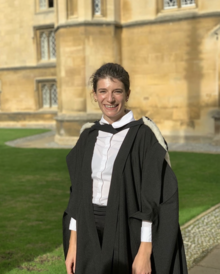
I recently completed a PhD in the Classics Faculty, which considered Roman cooking and eating habits through a study of pottery. Prior to that I did an Undergraduate degree at the Faculty and spent a couple of years in Rome pursuing a Master’s in Roman Archaeology.
My fascination with Roman pottery began in the first year of my Undergraduate degree, when I had the chance to join the Faculty’s excavation project at Interamna Lirenas (Lazio, Italy). Admittedly, lifting buckets and swinging pickaxes in a dusty Italian trench isn’t everyone’s ideal summer holiday, but the thrill of uncovering traces of the Roman world and the camaraderie of working in such a friendly team soon had me hooked. While I had come to Classics out of an interest in literature, archaeology offered a practical way of engaging with the ancient world that resonated with my enjoyment of being outdoors and learning by doing.
At Interamna, I had my first hands-on experience with pottery and was fortunate to develop this interest further with the expertise available in the Faculty. I was particularly drawn to the project’s research on commonware pottery, the everyday vessels used for cooking, storing, and eating their food. Commonwares have received relatively little attention in scholarship yet hold a wealth of information about daily life. They provide a window into the experiences of a broad social spectrum, including people whose lives are often absent from other historical forms of evidence. This interest in how ordinary people lived in ancient Italy led me to pursue upon a PhD in this field.
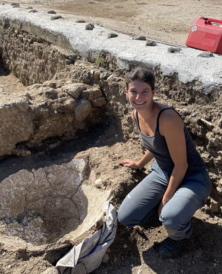
In the field at Interamna
My PhD explored food habits and commonwares in Italy from 350 BC to AD 550, investigating how shifts in cooking vessel use could help answer broader social and historical questions about life in ancient Italy. Through these everyday objects, I explored themes including migration in the ancient world, the relationship between urban and rural communities, and the influence of northern Africa on Italian cooking traditions. This research also prompted reflection on our own food habits and how what and how we eat is inextricably bound up with our own cultural and social identities.
Beyond my research, the PhD offered numerous opportunities to get involved with the Faculty’s wider work – organising a Great Roman Bakeoff competition in UK schools, supervising Undergraduate students, lecturing at Open Days, and working behind the scenes at the Classical Association Conference.
I remained involved in the Interamna Lirenas project, seeing its expansion from the excavation of a Roman theatre to the exploration of a Roman road, basilica, and bath complex as we worked to uncover more and more of the ancient town. Collaborating with the local Italian community, we hosted cultural events ranging from music nights and dance performances to guided tours and interactive children’s activities. These experiences deepened my understanding of both the scientific and logistical aspects of the project. Additionally, I was encouraged to expand my pottery research skills by working on other projects, which included an enjoyable stint at the British School of Rome.
Closer to home, I got involved with the Faculty’s outreach initiatives, particularly in the Cast Gallery. A highlight was the annual Twilight at the Museum event, which involved dressing up as a Greek god/goddess and welcoming families and children to an immersive Classical-themed evening. This was a fantastic way to get involved in the local community and meet the next generation of Classicists!
The PhD gave me the opportunity not only to be part of a fantastic research community, but also to discover the importance of the work beyond it – engaging in communities within and outside the University to explore just how relevant and exciting Classics can be.
Please consider supporting PhD students like Dominique with a Postgraduate Studentship